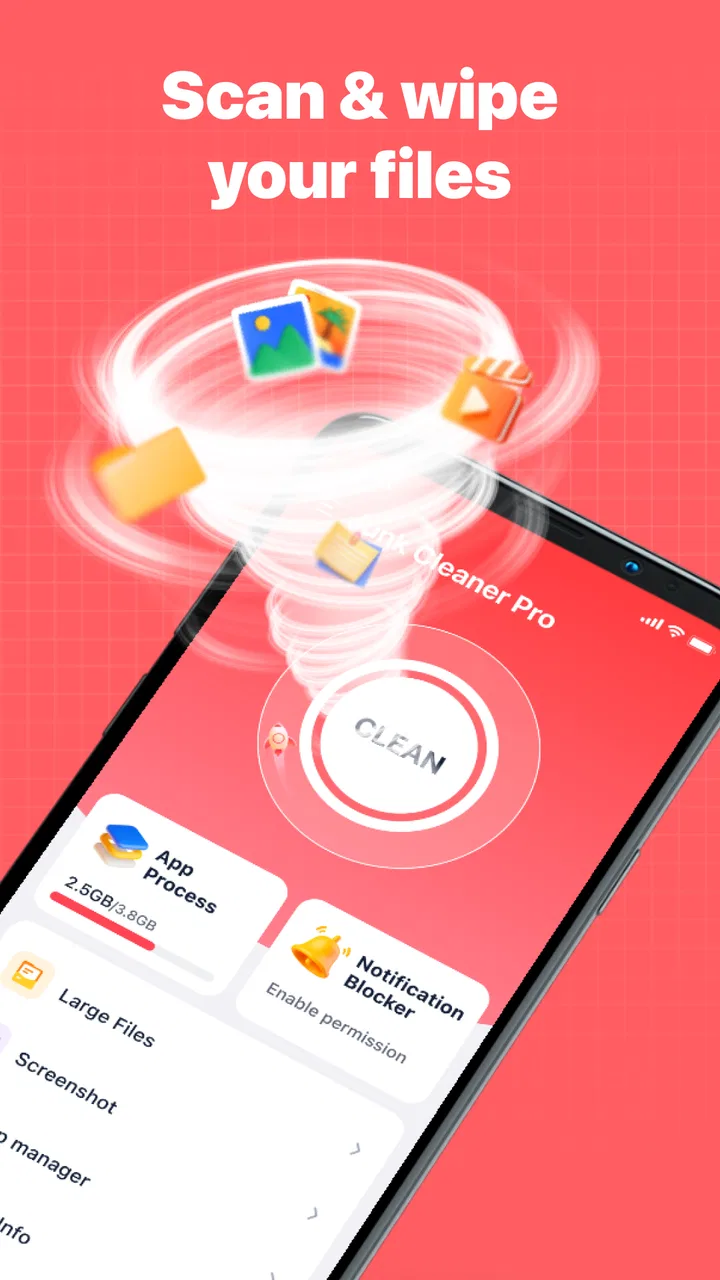
Junk Cleaner Pro
- 4.2
- Rating
- 1.00M
- Installs
- Free
- Price

 Analysis by App-foxy
Phone storage problems rarely arrive at a convenient time. I notice them when a camera refuses to save a photo, an update needs extra room, or an app starts behaving as if the device is running on fumes. Junk Cleaner Pro approaches that everyday problem as a focused Android cleaning tool rather than an all-purpose maintenance suite. After using it as a routine storage check, I found its main value is not the promise of a dramatic one-tap rescue, but the way it encourages a repeatable cleanup habit.
That distinction matters. A cleaner can be useful when it helps me see what is taking space and remove items I genuinely no longer need. It becomes less useful when I treat every suggested file as disposable. My experience with this app is therefore positive but careful: it is a convenient starting point for tidying an Android phone, especially for people who want a simple tool, but it should not replace sensible file review or the phone’s own storage controls.
How I use it as a baseline storage workflow
Junk Cleaner Pro is a free Tools app from ByteWizard, with an Everyone content rating and support for Android 7.0 and later. Its current version is 1.0.9, and the app has built a visible audience of over one hundred thousand installs. Those details make it approachable for older compatible phones as well as newer devices, although the experience naturally depends on how much storage and processing headroom a particular phone has.
You May Also Like

 Blood Strike: 2.5 Anniversary
Blood Strike’s Loadouts Turn Every Drop Into a Tactical Gamble
A close look at Blood Strike’s custom loadouts: how fast access to signature weapons reshapes its battle royale rhythm, rewards preparation, and narrows the gap between fights.

 Pandora - Music & Podcasts
Pandora’s Music Is Easy to Start, but Harder to Recover
Pandora’s strength is its low-effort path from a seed to a station. Its weak spot is how much confidence it asks you to place in connection, setup, and quiet recovery.

 8 Ball Pool
 Is Built on Rivalries, Rematches, and Routine
A close look at the rivalries, rematches, shared routines, and unanswered safety questions that turn a quick pool match into a persistent mobile community.

 Samsung Music
’s Quiet Strength Is Playing What You Already Own
Its reach comes less from spectacle than from dependable access to a personal library. That simplicity is both the app’s strongest retention engine and its ceiling.

 AccuWeather: Weather Radar
AccuWeather Review: A Quick, Clear Forecast for Everyday Decisions
For everyday plans, the best forecast is the one you can understand quickly. AccuWeather makes rain timing, radar, and local conditions easy to act on, with a few trade-offs.

 Hill Climb Racing
Why Hill Climb Racing Still Turns Crashes Into One More Run
A tiny car, a bumpy hill and one more upgrade: Hill Climb Racing keeps resurfacing because its simple chaos makes every near-miss feel personal.
More From Our News Desk



I start with a scan instead of immediately tapping a cleanup command. That first pass gives me a useful moment to separate genuine clutter from files that only look unnecessary. Temporary remnants, repeated downloads, old installation packages, and cached material can all be reasonable cleanup candidates, but a thumbnail, document, or media file may still matter even if its name looks unimportant.
My baseline routine is deliberately conservative. I scan, inspect the categories the app presents, remove only items I recognize as safe to lose, and then check the phone’s available storage through its normal system settings. This makes the app part of a workflow rather than an authority. It also prevents a common mistake with cleaning utilities: assuming that the largest possible deletion is automatically the best result.
The most practical everyday scenario is a phone used heavily for messaging and photos. After several weeks, downloaded images, forwarded clips, temporary files, and abandoned attachments can make storage feel crowded. I would run the cleaner before a trip or before installing a large update, then open my gallery and file manager separately to review personal media. The cleaner helps with the less interesting housekeeping; I keep control of anything irreplaceable.
That approach is especially useful for someone who does not want to browse Android folders manually. The app gives the cleanup task a clear starting point, while my own review supplies the judgment. I would not expect it to transform a nearly full phone into a new device, and I would not use it as a substitute for moving photos to another location. It is better understood as maintenance than as a storage expansion tool.
What I check before removing anything
I pay attention to the difference between temporary data and personal data. A cache can often be rebuilt by an app, while a downloaded document or a locally saved video may be the only copy I have. I also look at the timing of files. Something old is not automatically useless, particularly if it belongs to a project, a journey, or an offline collection I still use.
Another useful habit is to clean in small batches. Rather than selecting every result from a scan, I remove one obvious group, rescan if needed, and watch how the phone behaves. This takes longer than a blind tap, but it makes unexpected changes easier to identify. If an app later needs to rebuild cached content, I know which cleanup action may have caused it.
I also avoid cleaning immediately before an important offline activity. If I am about to travel, present from my phone, or rely on navigation without a connection, I prefer to review storage earlier. That gives me time to restore or redownload anything that turns out to be useful. A cleaning app is most helpful when used calmly, not as a last-second panic button.
Settings, shortcuts, and repeatable habits that make it more useful
The settings worth checking are the ones that affect how confidently I can review results. I look for ways to control scan areas, notifications, exclusions, or confirmation behavior when those options are available in the installed build. I do not assume that a cleaner should be allowed to make broad decisions without a final look from me. Keeping review steps visible is more valuable than saving a few taps.
I would also check whether the app asks to be treated as a regular maintenance tool or whether it simply waits for me to open it. That changes how I build a routine. If it provides reminders, I prefer a low-frequency schedule that matches my habits rather than reacting to every alert. Too many notifications turn a useful utility into background noise, and I am more likely to ignore all of them.
For a phone shared with work and personal tasks, I make my own exclusion list outside the cleaner. I note folders that contain important documents, exported recordings, or offline media, then avoid deleting them during a general pass. This is a small but advanced habit: the safest cleanup system is not the one that finds the most files, but the one that consistently distinguishes disposable material from files with a purpose.
Android’s own storage screen remains an important companion. It usually gives the broader picture of apps, media, and system use, while a dedicated cleaner can make routine clutter easier to spot. I use the system screen when I need to understand a large category, and Junk Cleaner Pro when I want a more focused cleanup session. Neither view should be treated as the complete story on its own.
There is also a privacy advantage to keeping the workflow local and deliberate, although I do not treat that as a reason to skip reading the app’s own prompts and permission requests. Any utility that examines files deserves the same attention I would give a file manager. I grant only what is necessary for the task and avoid approving actions I do not understand. That is good practice with this app and with every storage tool.
A faster pattern for busy days
When I am short on time, I use a three-pass pattern. The first pass is a quick scan. The second is a visual check of the largest or most obviously temporary groups. The third is a separate look at personal media through the gallery or file manager. This is faster than inspecting every filename, but safer than accepting one large selection without context.
A second shortcut is to clean after a predictable event rather than waiting for a storage warning. For example, after returning from a trip, I can review downloaded maps, duplicate screenshots, and temporary media while I still remember what each file is. After finishing a project, I can remove installers and drafts that are no longer needed. These moments provide context that a later automated scan cannot provide.
I find it helpful to keep the app’s role narrow. If the phone feels slow, I do not assume that junk files are the cause. I first consider a full storage drive, an aging battery, an app with a problem, or a pending system issue. The cleaner can assist with storage housekeeping, but it is not a universal performance diagnosis. That limitation is easy to overlook because cleaning tools naturally invite broad expectations.
For older Android phones, the app’s minimum operating system requirement is a practical advantage. Someone keeping a compatible older handset may prefer a focused utility that does not require moving to a newer device. At the same time, older phones often have less free space and slower storage, so scans and deletions may feel less immediate than they would on a recent model. I would allow the process to finish rather than repeatedly tapping controls.
The app is also a reasonable fit for people who want a free starting point. I would recommend it to a friend who regularly forgets about downloaded files and wants a simple reminder to review storage. I would be more cautious recommending it to someone who already has a carefully organized file system, ample free space, or a strong preference for using only built-in Android tools. In those cases, adding another utility may create more decisions than value.
Where the cleaner helps, and where it reaches its limits
The biggest limitation is shared responsibility. A cleaner can identify likely clutter, but it cannot know why I saved a file or whether a seemingly redundant item is important. That is particularly true for messaging media, screenshots, recordings, and offline content. I therefore treat every broad cleanup suggestion as a prompt for review, not as permission to erase without thinking.
Another limit is that deleting junk does not guarantee a visible speed improvement. Freeing space can make a crowded phone easier to manage, but it will not repair damaged hardware, improve a weak network connection, or solve an app-specific bug. If the real issue is a single misbehaving application, I would investigate that application directly instead of repeatedly scanning the entire device.
I also would not use a cleaner as my main duplicate-photo solution. Duplicate detection requires visual comparison and sometimes knowledge of which copy is original, edited, or already backed up. A general storage scan may help reveal that media is consuming space, but the final decision belongs in a gallery or dedicated photo-management workflow where I can compare images properly.
There is a similar trade-off with app caches. Clearing cache may recover room, but apps can rebuild that data, and the first launch afterward may feel less immediate while content returns. I use cache cleanup when storage pressure is real, not as a ritual after every scan. If I have plenty of free space, leaving frequently used caches alone can be the more sensible choice.
Compared with Android’s built-in storage manager, Junk Cleaner Pro is attractive when I want a dedicated cleaning session with less wandering through system menus. The built-in option is better for understanding the overall storage picture and managing apps with system-level context. Compared with a manual file manager, the cleaner is quicker for routine inspection, while manual browsing gives me more precise control. Compared with a cloud backup service, it solves a different problem entirely: it removes selected local clutter, but it is not a substitute for preserving important files.
That comparison explains who should skip it. If you expect one button to identify every unnecessary file, recover permanent space from every category, and fix general phone slowness, this is not the right tool. If you want a focused assistant for recurring cleanup and you are willing to review what it proposes, it makes more sense. The app’s value rises with disciplined use and falls with blind automation.
My practical routine after repeated use
My preferred routine is short enough to repeat but cautious enough to avoid regret. I begin with a scan, inspect the result groups, and remove only obvious temporary material. I then check the gallery, downloads, and important document folders separately. Finally, I look at the system storage screen to see whether the real pressure came from apps, media, or something else. This sequence keeps the cleaner from becoming a distraction from the actual storage problem.
I also keep notes on recurring sources of clutter. If the same type of download appears every time, I change the habit that creates it rather than relying only on deletion. If messaging media is the main issue, I review automatic download behavior in the messaging app. If screenshots accumulate, I sort them after completing a task. These changes usually have more lasting value than running a scan more often.
For a family member who is less comfortable with Android storage menus, I would demonstrate the review step rather than simply telling them to tap clean. I would explain that personal photos, documents, and recordings need a closer look. That small lesson is more important than the app itself because it prevents a common misunderstanding: “junk” is a suggestion category, not a guarantee that every listed item has no value.
ByteWizard’s app has a solid foundation for this focused role. It is free, accessible to a broad Android audience, and carries an average rating of 4.3 from around one thousand three hundred ratings, alongside more than one hundred written reviews. Those figures suggest that many users find the concept useful, but they do not remove the need for personal caution. A rating can describe general satisfaction; it cannot decide which files I should keep.
The release date of September 11, 2025 also places the app in a relatively recent stage of its life, while version 1.0.9 indicates that it has already moved beyond its first build. I would still pay attention to how future updates affect the interface and cleanup flow. With maintenance utilities, a familiar review process matters, so I prefer to revisit settings after an update instead of assuming every behavior remains identical.
The best result comes from combining the app with a storage habit, not from surrendering every deletion decision to it. I use it to surface routine clutter, then confirm the context elsewhere. That balance gives me the convenience of a dedicated cleaner without pretending that an automated scan understands my personal files.
My verdict for different kinds of Android users
I recommend Junk Cleaner Pro to Android users who want a straightforward way to begin regular storage maintenance, especially people who accumulate downloads, temporary media, and forgotten files. It is also worth considering for owners of older compatible phones who want a free tool that focuses on cleaning rather than asking them to replace their device. The Everyone rating makes it approachable for general household use, provided the person using it understands the review step.
I would choose Android’s built-in tools instead if I needed a complete storage diagnosis, app-by-app management, or the most direct system context. I would choose a manual file manager when every folder needs precise inspection. I would choose a backup or photo-organizing solution when the real goal is preserving and sorting memories rather than deleting local clutter.
For me, the app succeeds when I use it as the first stage of a repeatable workflow: scan, question the result, remove clear clutter, and verify the outcome. It is less convincing as a promise of automatic phone optimization. That honest boundary is also its strength. Junk Cleaner Pro can make an uninteresting task easier, but the experienced approach is to combine its convenience with careful settings, quick repeatable patterns, and a clear understanding of what cleanup can and cannot accomplish.
After trying that approach, I would keep it available for occasional maintenance rather than run it constantly. A short session before a major download, after a busy period of messaging, or when storage begins to tighten is enough for my needs. If you want a free, focused cleaning assistant and are comfortable making the final decisions yourself, Junk Cleaner Pro is a sensible option. If you want complete automation or a tool that solves every performance complaint, I would look elsewhere.
FAQs for Junk Cleaner Pro
01What features does Junk Cleaner Pro offer?
Junk Cleaner Pro provides a comprehensive suite of features designed to optimize your device. It includes junk file removal, memory boosting, CPU cooling, and battery optimization. The app also offers real-time protection, ensuring your device runs smoothly by clearing cache and unnecessary files, enhancing performance significantly.
02Is Junk Cleaner Pro safe to use on my device?
Yes, Junk Cleaner Pro is safe to use. It employs advanced security protocols to ensure that only unnecessary files are removed from your device. The app does not access personal data or compromise your security, making it a reliable tool for enhancing device performance without risking your privacy.
03Will using Junk Cleaner Pro improve my device's battery life?
Absolutely. Junk Cleaner Pro includes a battery optimization feature that identifies and stops power-draining apps running in the background. By managing these apps and reducing unnecessary processes, it helps to extend your device’s battery life, allowing you to enjoy longer usage without frequent recharges.
04Does Junk Cleaner Pro support both Android and iOS devices?
Yes, Junk Cleaner Pro is compatible with both Android and iOS platforms. The app is designed to cater to the specific needs of each operating system, ensuring optimal performance and user experience. You can download it from the Google Play Store for Android or the App Store for iOS devices.
05How often should I use Junk Cleaner Pro to maintain my device?
To keep your device running efficiently, it's recommended to use Junk Cleaner Pro at least once a week. Regular usage helps eliminate accumulated junk files and optimizes performance. However, if you are a heavy user, using it more frequently can further enhance your device’s speed and efficiency.
Pros
- Efficiently frees up storage space.
- Improves device performance quickly.
- Intuitive and user-friendly interface.
- Offers detailed storage analysis.
- Supports multiple languages.
Cons
- Contains frequent ads in free version.
- Limited features without premium.
- Occasional false positives on files.
- Requires regular updates for efficacy.
- No customization for cleaning options.

Junk Cleaner Pro
Gallery